
Molecules similar to LSD combat depression without the trip.
Design molecules activate the selected pathway of the psychedelic 5HT2a receptor.
Scientists have designed compounds that target the same key receptor that LSD activates without causing hallucinations. A single dose produced powerful antidepressant and anxiolytic effects in mice that lasted up to two weeks.
The study, published on September 28, 2022, in Nature This could offer a way to develop new types of antidepressants that are more effective and have fewer side effects than current medications, which don't work for many patients and must be taken every day. It represents the culmination of half a dozen years of work by a team that began at UC San Francisco, UNC-Chapel Hill, and Yale, and later expanded to Duke and Stanford universities.
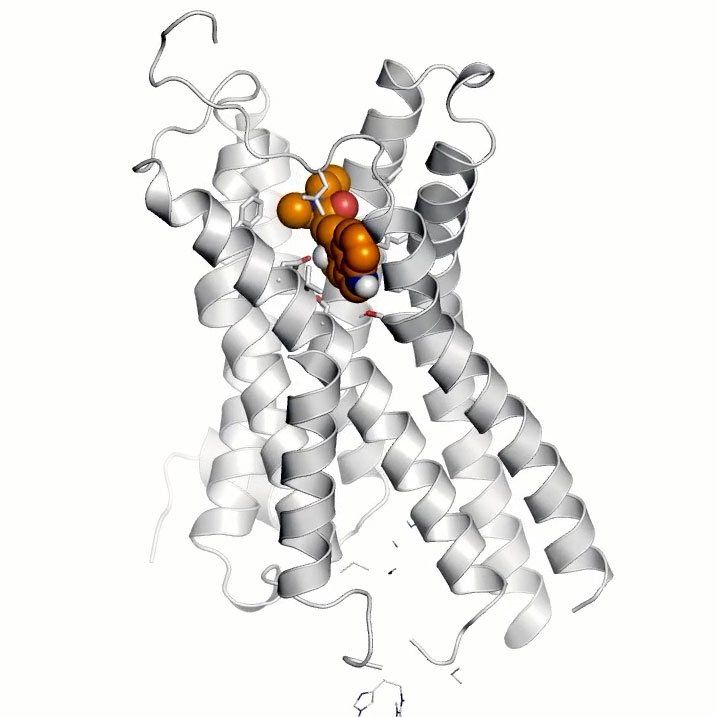
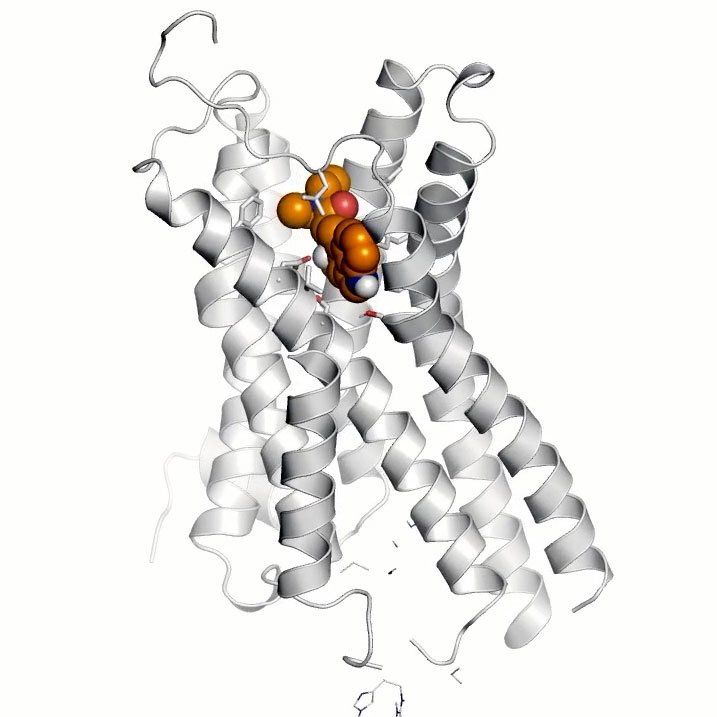
The compounds were designed to fit into the 5HT2a receptor, which is the primary target of psychedelics such as LSD and psilocybin mushrooms. The receptor is also activated by serotonin, a natural hormone that regulates mood, cognition, and many other bodily functions.
The 5HT2a receptor is believed to play a role in schizophrenia and other psychotic disorders, as well as in anxiety and depression, and a number of antipsychotic and antidepressant drugs block its activity. The new molecules activate it, but in a very different way from psychedelics.
Recent studies have found that, when administered in combination with psychotherapy, one or two high doses of psychedelics such as psilocybin and MDMA can have significant long-term effects on depression, anxiety, and PTSD. It is not known whether travel is essential for treatment, or whether medications can be developed to alleviate symptoms without it.
The current study offers the possibility of unraveling these effects. Although it has been known for several decades that 5HT2a receptors activate different signaling pathways in cells, until now there were no compounds selective enough to see what each pathway did.
The scientific team discovered that the receptors can trigger two different pathways, one hallucinatory and the other antidepressant/anxiolytic. LSD activates the first one more, while the newer compounds activate the second one more.
Receivers are like antennas. They pick up a chemical signal and, downstream, a lot of things are activated in a cell.
"The receivers are like antennas," he said. Brian Shoichet , PhD, professor of pharmaceutical chemistry at the UCSF School of Pharmacy. "They pick up a chemical signal and, downstream, a lot of things are activated in a cell."
Shoichet and others on the team did not set out to find molecules that could be used to make new drugs for depression. Their initial goal was to find a way to track a type of molecule called tetrahydropyridine, which is difficult to synthesize and therefore absent from virtual libraries, even though it is common among FDA-approved drugs.
But another team member, Bryan Roth, MD, PhD, of UNC-Chapel Hill, thought the molecules could be an interesting way to test the function of the 5HT2b receptor, which he had been studying along with 5HT2a since the 1980s.
"There really wasn't any sense that drugs like psychedelics that activate this receptor would be therapeutic until psilocybin was tested in clinical trials for depression and demonstrated to have this remarkable effect," he said. "That really galvanized our interest, which basically started this collaboration."
Roth, the distinguished professor of pharmacology at the UNC School of Medicine, Michael Hooker, and some other team members recently solved the crystal structure of the 5HT2b receptor. They used this structure to model 5HT2a until Roth's group developed the crystal structure of 5HT2a.
The compounds were selected from a computational library of 75 million candidates. Jonathan Ellman, PhD, Eugene Higgins Professor of Chemistry and Professor of Pharmacology at Yale, synthesized them. And the team from UCSF, UNC, and Yale worked for over a year to optimize them.
"The final molecules were 100 times more potent than the ones we started with," said Shoichet, although they were still not as strong as LSD. "In animals, they are very potent, much more potent than Prozac."
The team expanded to test the designer's molecules in mice, adding William Wetsel, PhD, who directs the Mouse Behavioral and Neuroendocrine Analysis Core Facility at Duke. His lab looked for head twitch responses, which are the telltale signs of psychedelic activity in mice. But the rats barely twitched.
Wetsel's lab conducted a battery of tests on mice to see if the molecules could improve symptoms analogous to human anxiety and depression. And they were highly effective.
After many years, what began as a scientific experiment has led to a discovery with great clinical promise. The work was aided by a $27 million grant that Shoichet and Roth received in 2020 from the Defense Advanced Research Projects Agency (DARPA) to develop new psychiatric drugs.
The team's next project will be to optimize the compounds, making them selective enough to be used in clinical trials. The approach was patented by Yale, UNC-Chapel Hill, and UCSF and licensed to Onsero, a Canadian startup.
A key issue will be creating molecules that have no affinity for 5HT2b. Drugs that target this receptor, such as the banned diet drug fen-phen, can cause valvular heart disease when taken chronically. This receptor is also affected by psychedelics, especially LSD.
"We weren't looking for anything therapeutic," Roth said. "After a lot of work, we ended up with these very selective compounds."
Authors: In addition to Shoichet, other UCSF authors include co-first author Anat Levit Kaplan, Ying Yang, and senior co-author John Irwin. The full list of authors is in the article.
Financing: DARPA HR001119S0092 and NIH grants R35GM122473, R35GM122481, NIDA R37-DA045657, and GM71896.