
Psychoactive plants and fungi are becoming better known.
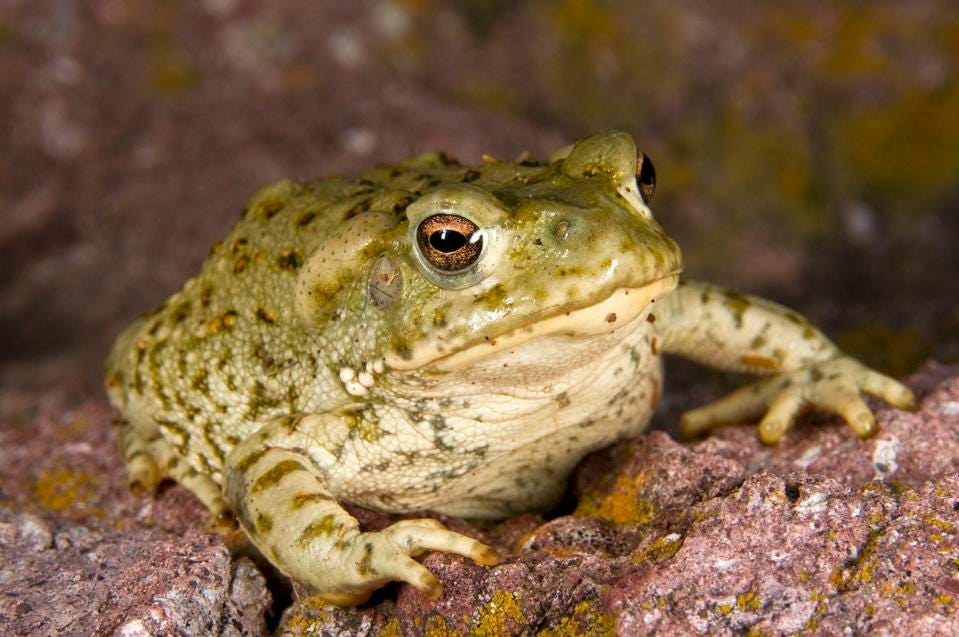
Psychoactive plants and fungi are becoming better known, and we are beginning to hear more about amphibians whose secretions are also capable of altering consciousness. The toad known as "Bufo" is increasingly being talked about in the media and online forums. The Latin nomenclature of Bufo alvarius It is often used to refer to a species of frog that produces large quantities of the psychoactive substance 5-MeO-DMT within its specialized skin glands, most prominently, its parotid glands. But this infamous amphibian goes by many other names, scientific or otherwise, which we will discuss in more detail below.
Perhaps the name Kambô also rings a bell. Are these two amphibians equally psychoactive? In response to the ongoing confusion in the world of expanding consciousness fauna, this article offers some clarity by delving into the origin of this amphibology . 1
The many nicknames of “Bufo”
Let's get straight to the point. The frog widely known as Bufo alvarius It has a more precise scientific name, which is Incilius alvarius. I. alvarius It is a species of amphibian belonging to the Bufonidae family, also known as the "True Toad". Its habitat spans the southwestern United States and northwestern Mexico. It is also known as the "Colorado River Toad" because it used to reside in the areas surrounding this infamous body of water. Another common name is the "Sonoran Desert Toad" because it is found in the Sonoran Desert region. 2
The earliest known reference to the term "Bufo" comes from the Roman poet Virgil in the 1st century BC, referring to "a certain type of poisonous ground toad". 2 However, this species was first described in the scientific literature in 1859. Specifically, it was the French physician and zoologist Charles Frédéric Girard who named it. Bufo alvarius. 3


The frog later received its Latin name. Phrynoidis alvarius However, this was not widely accepted. Bufo It was used to describe this species from 1859 until 2006, when Darrel R. Frost and colleagues changed to Cranopsis alvaria. This Latin word - Cranopsis - It has been used to classify various frogs, mollusks, and branchiopods. Later that year, the authors pointed out that this scientific name was inaccurate and proposed Ollotis as a substitute, calling the frog de Ollotis alvaria . 3
In 2009, Frost and colleagues decided that the genre Ollotis it should be changed to Incilius , which graced us with the correct nomenclature of Incilius alvarius used today. 3 In 2011, Mendelson et al. integrated the past scientific names for the frog and made them synonymous with Incilius. 4 Geography seems to define Incilius Moreover, these frogs only inhabit the southwestern United States and northern Mexico. Some argued that Incilius should be considered a subgenre of Bufo . For now, they are different genres. 2.3 Incílio has now been widely accepted and is commonly used in scientific literature, although the psychedelic community has not yet caught up with it.
Although there are other species of frogs that also contain bufotenin (such as Rhinella marina , Bufo bufo or Bufo viridis ), the secretions of the Sonoran Desert toad ( I. alvarius "They are the only ones that contain 5-MeO-DMT, or 5-methoxy-N,N-dimethyltryptamine, among all known frog species." 5 That's because I. alvarius It contains a special enzyme (O-methyltransferase) that converts bufotenine into 5-MeO-DMT, a very potent psychoactive substance. Secretions can reach up to 5-15% of the total dry weight in the parotid glands, resulting in a considerable amount of 5-MeO-DMT. A desert frog from Sonoran Can produce up to 75 mg of this substance. 5 Thus, I. alvarius It produces the highest number of psychoactive compounds and is therefore the most sought after by those looking for a psychedelic experience.
I. alvarius It is of great cultural importance to the Yaqui people of the southern Sonoran Desert region. Although this particular indigenous group in the area where the toad resides has a long-standing kinship with the animal, smoking toad venom only became a practice in the 1980s. An increase in interest came when a widely distributed pamphlet – Bufo alvarius : The Psychedelic Toad of the Sonoran Desert Albert Most described the 5-MeO-DMT content of frog secretions. These narratives led to a modern practice of "smoking frogs" that has become popular in the psychedelic community.
Smoking toad venom is an example of current practices that are not specifically rooted in the traditional indigenous lineages where these animals live. 6.7 The growing interest in the Sonoran Desert toad as a source of 5-MeO-DMT is leading to increased pressure on the animals' populations and ongoing sustainability concerns. 5 Indigenous leaders have specifically asked people not to collect or consume the Sonoran Desert Toad while populations face such threats. Synthetic 5-MeO-DMT is an alternative that does not put pressure on the frog or its environment.
Kambô vs Incilius alvarius
Kambô, an Amazonian tree frog ( Phyllomedusa bicolor ), is also called “frog” (or frog , in Spanish) when in fact it is not. This amphibian is also known as campus , acate, Waxy-Monkey Treefrog, Giant Maki Frog or the "jungle vaccine". Kambô is a traditional medicine extracted from the skin secretions of P. bicolor . This nocturnal tree frog inhabits the Amazon and Orinoco river basins of Bolivia, Brazil, Colombia, Ecuador, French Guiana, Guyana, Peru, Suriname, and Venezuela. 8
Kambô and the Sonoran Desert toad are not closely related species, nor do their secretions have the same properties. To add to the confusion, a common name for the Sonoran Desert frog in Latin America is also... frog. The experiments conducted using skin secretions from these animals yield very different results.
Although historically classified as a psychedelic, Kambô does not produce hallucinatory or psychoactive effects. More than 15 indigenous groups in the Amazon Basin have worked with frogs for generations to achieve a deep cleansing of body and soul. 9,10 In comparison, the parotid gland secretions of the Sonoran Desert toad contain 5-MeO-DMT and bufotenine, which immediately induce strong psychedelic experiences when smoked. 7 Since it became more popular in psychedelic communities, the demand for I. alvarius This led to significant pressure on their populations. Conservation issues have led to calls for incentives to use synthetic 5-MeO-DMT. 7
The application routes with Kambô and I. alvarius They are very different. The secretions of the Sonoran Desert Toad are inhaled through smoking or inhalation, while Kambô medicine is applied by making small burns on the skin with a stick. Kambô is then applied to the wound, and its effects last between five and 20 minutes. 11 The experience with I. alvarius It also has a short duration of action, lasting only 10 to 20 minutes. However, “given the different routes of application, users generally do not confuse the two substances, although ceremonies combining the secretions of Kambô and Bufo alvarius [sic] have been proposed recently in Western psychedelic circles. 12
Although Kambô is not facing the same sustainability pressures as the Sonoran Desert toad, the rapid increase in interest has generated concern among those worried about the tree frog's future. Environmental activists have called for research into the impact that overharvesting and habitat safety would have on the animal's future population and on the indigenous communities that traditionally work with Kambô. Some people also express concern for the animal's well-being, especially as its medication becomes more popular. As interest in Kambô expands, those who gravitate towards its medicine should be aware of supply issues and the impact their choices may have on the tree frog, its habitat, and indigenous communities. 13
What does the research say?
It is important to note that there is little information regarding the safety or effectiveness of practices involving the Sonoran Desert Toad or Kambô. In terms of 5-MeO-DMT, there isn't much published. The information currently available comes from observational research, not from controlled studies. However, these observational studies showed that 5-MeO-DMT led to significant reductions in symptoms of anxiety and depression in approximately 80% of participants. 14 In addition, some observational studies have analyzed United States veterans who completed treatment involving 5-MeO-DMT approximately 48 hours after ibogaine administration. Researchers found significant reductions in symptoms of anxiety, depression, post-traumatic stress, alcohol consumption, suicidal ideation, and cognitive decline associated with traumatic brain injury. 14
In terms of Kambo, a study published in 2018 showed that "[t]he administration of Kambo results in a complex of symptoms similar to transient anaphylactic shock." However, it appears that this is not caused by an exaggerated reaction of the immune system to an allergen. It appears to be the pharmacological effect of bioactive neuropeptides, likely acting synergistically with one another. Based on these findings, the author provided some recommendations to make Kambô rituals as safe as possible. First of all, starting with a small dose is important to see how the participant responds. Furthermore, the effectiveness of Kambô depends on many factors, so the response to dosage can vary greatly. The author noted that high doses can create serious adverse reactions that may require hospitalization. 15
Another study reports that the acute psychological effects of Kambô are very different from classic psychedelics that act on serotonergic pathways. Researchers have found that experiences with this medication can result in increased energy, stamina, and mental clarity after initial feelings of illness and exhaustion subside. These findings corroborate what anecdotal accounts have described in the Kambô experience. Furthermore, “the lasting effects were predominantly described as positive and pleasant, revealing high scores on measures of personal and spiritual meaning.” The authors concluded that, although the Kambô experience is unique, the transformative effects of working with it can be comparable to classic serotonergic psychedelics. 16
Paving the way for a sustainable future for psychoactive amphibians.
One of the greatest benefits for those who work with amphibian, botanical, or fungal medicine is when their personal growth positively influences the community. Both Kambô and the Sonoran Desert Toad are integral parts of the traditional communities that honor them. Therefore, it is essential that our quests to explore consciousness do not decimate its existence. Although more research is needed, these topics should be investigated with a high degree of respect for these animals and their biocultures.
When discussing frogs with medicinal or psychoactive properties, it is best to distinguish between species to avoid misunderstandings and ensure ethical and safe practices. How experiences with Kambô and I. alvarius As these decisions become increasingly sought after, it is crucial that the psychedelic community is aware of the impact they have on animals and their environment.
Amphibians are among the most endangered invertebrates on the planet. According to Amphibiaweb "In just the last two decades, there has been an alarming number of extinctions; it is believed that nearly 168 species have become extinct, and more than 43% have declining populations." 17 The international community can seize this opportunity to become well-informed about their impact on animal medicine, their habitat, and the people who share the land with them. This will allow us to establish a lasting symbiotic relationship with our environment, which can be enjoyed by future generations.
As William Shakespeare said: "Sweet is the fruit of adversity, which, like the ugly, poisonous toad, bears a precious jewel on its head."
Thanks to Anny Ortiz and Jim Rorabaugh for their contributions and comments on this article.
References
- According to the Collins Dictionary, "double or doubtful meaning; ambiguity, especially of uncertain grammatical construction" and "an ambiguous phrase, proposition, etc."
- Frost, RD (2017). Amphibian species of the world: an online reference. Version 6.0. Electronic Database. American Museum of Natural History, New York. Available online: http://research.amnh.org/herpetology/amphibia/index.html . Retrieved July 5, 2022.
- Pauly, GB, Hillis, DM and Cannatella, DC (2009). Taxonomic freedom and the role of official lists of species names. Herpetologica, 65 (2), 115-128.
- Mendelson III, JR, Mulcahy, DG, Williams, TS and Sites Jr, JW (2011). The phylogeny and evolutionary natural history of Mesoamerican frogs (Anura: Bufonidae: Incilius) based on morphology, life history and molecular data. Zootaxa , 3138 (1), 1-34.
- The International Center for Ethnobotanical Education, Research and Service (ICEERS). (2019). Bufo Toad (Incilius alvarius): Basic information . PsiquePlantas. Retrieved July 5, 2022.
- Cotina, Ali. (2018). Controversies surrounding frog medicine . Chacrona. Retrieved July 7, 2022.
- Liana, Lorna. (2019). Bufo Deaths and Frauds Involving “Shaman” Toads Octavio Rettig and Gerry Sandoval . Entheonation. Retrieved July 7, 2022.
- AmphibiaWeb. (2007). Phyllomedusa bicolor : Waxy-Monkey Treefrog . University of California, Berkeley, CA, USA. Accessed July 4, 2022.
- Coffaci, Edilene & Silva, Filipe. (2018). New Urban Practices in the Surroundings of Kambô . Chacruna . Retrieved July 7, 2022.
- The International Center for Ethnobotanical Education, Research and Service (ICEERS). (2019). Kambô: Basic Information . PsiquePlantas. Retrieved July 5, 2022.
- Schmidt, TT, Reiche, S., Hage, CL, Bermpohl, F., & Majić, T. (2020). Acute and subacute psychoactive effects of Kambô, the secretion of the Amazonian Giant Maki Frog (Phyllomedusa bicolor): retrospective reports. Scientific Reports, 10 (1), 1-11.
- Davis, AK, So, S., Lancelotta, R., Barsuglia, JP, & Griffiths, RR (2019). 5-methoxy-N,N-dimethyltryptamine (5-MeO-DMT) used in a naturalistic group setting is associated with unintended improvements in depression and anxiety. The American Journal of Drug and Alcohol Abuse, 45 (2), 161-169.
- Ribeiro, Filipe. (2021). The Challenges of Kambô Conservation . Chacrona. Retrieved July 11, 2022.
- Mangini, P., Averill, LA, & Davis, AK (2022). Psychedelic treatment for concomitant alcohol use and symptoms of post-traumatic stress among US Special Operations Forces veterans. Journal of Psychedelic Studies, 5 (3), 149-155.
- Hesselink, JMK (2018). Kambo and its multiplicity of biological effects: adverse events or pharmacological effects. Int Arch Clin Pharmacol, 4 , 17.
- Schmidt, TT, Reiche, S., Hage, CL, Bermpohl, F., & Majić, T. (2020). Acute and subacute psychoactive effects of Kambô, the secretion of the Amazonian Giant Maki Frog (Phyllomedusa bicolor): retrospective reports. Scientific Reports, 10 (1), 1-11.
- Oshiro, Julianne. (2021) Why save amphibians? Amphibiaweb . Retrieved July 11, 2022.