

Beckley/Maastricht LSD Microdosing Study: Finding the Right Dose
Original Publication
First evidence of an effect of LSD microdosing on neuroplasticity in humans.
The Beckley/Maastricht Microdosing Research Programme was created to study the effects of LSD microdosing in humans, with a particular focus on mood, cognitive function, and pain control. The study, exploring the dose-response relationship in the physiological and psychological effects induced by LSD, saw twenty-four healthy volunteers receive single doses of 5, 10, and 20 micrograms of LSD, or a placebo.
The results clearly demonstrate, for the first time in a controlled and rigorous manner, the positive effects of microdosing on mood, cognition, and pain management.
Given the interest in BDNF (Brain-Derived Neurotrophic Factor) as a key marker in various neurodegenerative and neuropsychiatric disorders, the Beckley/Maastricht dose-finding microdosing study included, among other measures, changes in plasma BDNF levels after low doses of LSD (5, 10, and 20 μg) or placebo in healthy volunteers.
The findings demonstrated an increase in BDNF starting 4 hours after LSD administration. Six hours after administration, the increase in BDNF levels was proportional to the dose of LSD administered, a remarkable result that justifies studies in patient populations.
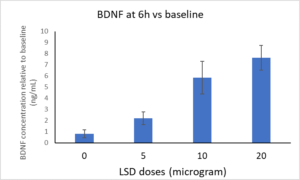
Change in BDNF 6h after measurement compared to baseline.
The important role of BDNF regulation in health and disease.
Several studies have shown possible links between BDNF and conditions such as depression, obsessive-compulsive disorder, Alzheimer's disease, diabetes, and eating disorders.
On the other hand, higher levels of the protein are associated with better cognitive function, mental health, and short- and long-term memory.
It has been found that microdosing LSD increases the level of BDNF, a marker of neuroplasticity.
Microdosing LSD increases pain tolerance.
Among other measurements collected throughout the microdosing days, pain tolerance levels were assessed using the Cold Pressor Test, a valid and low-risk test for evaluating individual pain thresholds that involves the use of a tank filled with cold water at 3°C. The volunteers were asked to submerge their hands in cold water for as long as they could. Measures dependent on the Cold Pressor Test include pain tolerance (i.e., the length of time participants can keep their hand on the tank) and subjective ratings of pain, discomfort, and stress.
The study consistently indicated that a 20-microgram dose of LSD significantly reduced the perception of pain. compared to a placebo, although lower doses do not have the same effect.
Overall pain tolerance increased by 20% with 20 micrograms. This means that the volunteers were able to remain immersed in cold water for much longer with a 20-microgram dose of LSD compared to those on a placebo. Individuals also reported a decrease in their subjective experience of pain and discomfort.
Notably, the changes in pain tolerance and subjective pain perception induced by low-dose LSD under these circumstances were comparable in magnitude to those observed after administration of opioids, such as oxycodone and morphine, to healthy volunteers.
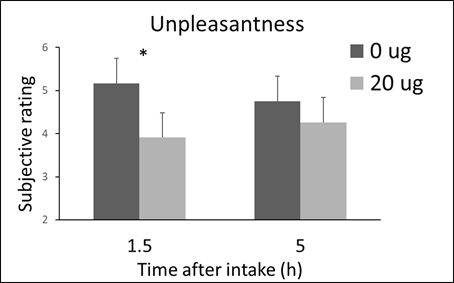
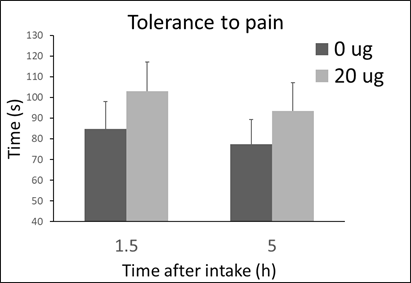
A low dose of lysergic acid diethylamide decreases the perception of pain in healthy volunteers.
Microdosing improves mood and alertness.
Our results also demonstrate that small doses of LSD – particularly the highest dose we investigated (20 micrograms) – significantly improved positive mood as well as alertness in our group of healthy participants.